


Last Updated: November 16, 2026
Quick Summary
The best sustainable animal clothing brands name their conservation partners, state how a purchase becomes a donation, and publish checkable totals, like Ralf Nature's 560€ raised for 4 causes. Pair that evidence with realistic, researched animal designs and certified organic or recycled fabrics. Verify the partner, the percentage, and the certification on the exact item before you buy.
- Verification takes about ten minutes and three browser tabs: brand page, partner site, public total.
- GOTS verifies organic fiber and processing, but not a product's conservation donation.
- A realistic tiger's stripes are asymmetrical, vertical, and continue onto the tail.
- Zoom product photos to the animal's face and paws, where cheap printing shows first.
- Ralf Nature reports 560€ raised across 4 causes and works with zoos, aquariums, and museums.
Table of Contents
- Why Sustainable Animal Clothing Is Booming in 2026
- Sustainable Clothing Brands That Support Wildlife Conservation: What Sets Them Apart
- How to Verify a Brand's Conservation Donations Before You Buy
- Organic Cotton Animal T-Shirts: Materials, Feel, and Durability
- Ethical Animal-Themed Clothing Brands: Reading Certifications and Supply-Chain Transparency
- Realistic Animal Designs vs. Cartoon Prints: What to Look For
- Red Flags and Common Mistakes When Shopping Sustainable Animal Apparel
- Join the Ralf Nature Insider List for Early Access to New Animal Designs
- Frequently Asked Questions
Why Sustainable Animal Clothing Is Booming in 2026
Sustainable animal clothing has moved from niche to mainstream, and the reason is simple: shoppers now ask harder questions before they buy. They want to know where the cotton came from, who stitched the shirt, and whether the animal on the front actually helps the animal in the wild. This guide answers those questions, because a label that says "eco" tells you almost nothing on its own.
The category is growing for three reasons. Wildlife lovers who visit a zoo or aquarium want a keepsake that means something. Parents want kids' clothes that survive the wash without leaching chemicals. And gift buyers want presents that carry a story, not just a logo.
Here is the uncomfortable part most roundups skip: a beautiful animal print and a real conservation donation are two separate promises. A brand can deliver one and fake the other.
Below, we walk through seven signs that separate a genuine sustainable animal clothing brand from a greenwashed one, with the checks you can run in ten minutes before you spend a cent.
Sustainable Clothing Brands That Support Wildlife Conservation: What Sets Them Apart
What sets a genuine brand apart is evidence, not adjectives. A real conservation partner can be named, contacted, and matched to a public donation record. A vague claim like "a portion goes to wildlife" cannot.
The strongest brands share four habits:
- Named partners. They list the specific zoo, aquarium, museum, or nonprofit they work with, not a generic "conservation organizations."
- A stated mechanism. They explain how a purchase turns into a donation, whether that is a fixed amount per item or a share of profits.
- Public totals. They publish what they have raised so far. Ralf Nature, for example, reports 560€ raised for 4 causes, which is a small number but a checkable one.
- Conservation messaging that respects the animal. Realistic designs paired with accurate species information beat cartoon mascots every time.
That last point matters more than shoppers expect. A brand that treats wildlife as a cute graphic tends to treat conservation the same way. One that gets the markings, habitat, and behavior right usually gets the mission right too.
If you want gift ideas that put this principle into practice, our guide to eco-friendly gifts for animal lovers is a good next stop.
How to Verify a Brand's Conservation Donations Before You Buy
Verification takes about ten minutes and three browser tabs. Start with the brand's own conservation page, then cross-check the partner, then look for a public total.
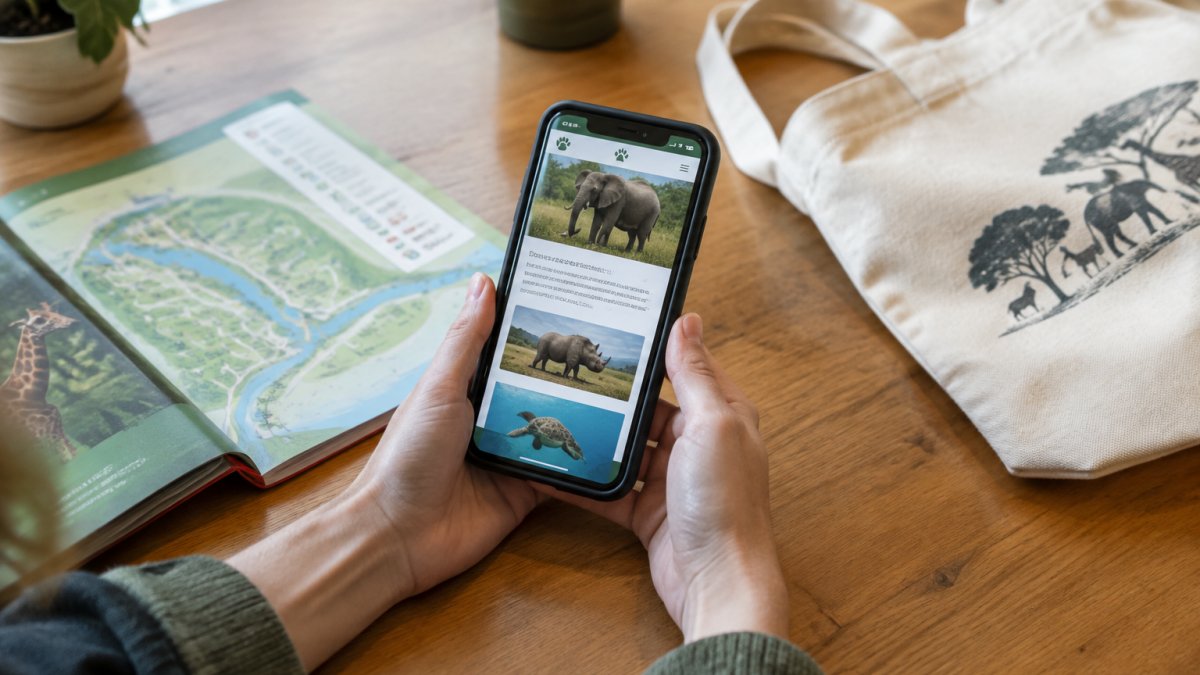
Run this checklist before checkout:
- Is the conservation partner named, with a link to the partner's own site?
- Does the partner's site mention the brand back, even in a supporter list?
- Is the donation amount or percentage stated clearly, not buried in vague language?
- Is there a running total or annual report you can read?
- Does the brand avoid implying a bigger impact than the numbers support?
A common mistake is trusting a badge with no link. If the partner cannot be found independently, treat the claim as unproven. You can also check charity registrations through official regulator databases in the brand's home country, which list registered nonprofits and their status.
The honest brands make this easy. The ones that make it hard are telling you something.
Organic Cotton Animal T-Shirts: Materials, Feel, and Durability
Organic cotton is grown without synthetic pesticides and is generally considered gentler on the environment than conventional cotton. Fabric and print quality are separate questions, so it is worth checking both.
What most guides miss is that the fabric and the print are separate quality questions. A great cotton tee with a cheap plasticky print will crack within a season. Look for these signals:
- Fabric weight. Mid-weight jersey drapes well and resists thinning.
- Print method. Water-based and discharge prints sink into the fabric and stay soft; thick rubberized layers sit on top and peel.
- Wash instructions. Cold wash and inside-out drying protect both the cotton and the artwork.
- Certification. Ask whether the cotton is certified organic or the recycled content is verified, rather than taking "sustainable" as a marketing word.
That last question comes up constantly from shoppers who have been burned before.
Durability depends on fabric weight, print method, and care. Shoppers who have been disappointed by fraying in a few weeks are right to ask about it before buying.
If you are weighing recycled synthetics against natural fibers, our honest breakdown of whether recycled polyester is actually sustainable digs into the trade-offs.
Ethical Animal-Themed Clothing Brands: Reading Certifications and Supply-Chain Transparency
Certifications can help separate ethical animal-themed clothing brands from marketing copy, but only if you know which ones actually mean something. A certification is a third-party audit of a specific claim; a badge a brand designs itself is decoration.
Here is how to read the common ones, and, more importantly, what each one does and does not tell you about an animal-themed purchase:
Certification or claim |
What it verifies |
What it does not verify |
|---|---|---|
GOTS (Global Organic Textile Standard) |
Organic fiber content plus processing and social criteria across the supply chain |
A specific product's conservation donation |
Organic cotton standard (e.g., GOTS-recognized fiber standards) |
Fiber grown and processed to organic rules |
Working conditions at the cut-and-sew stage |
Fair trade certification |
Fair wages, safer factory conditions, and a premium paid to workers |
Environmental impact of the fabric |
B Corp certification |
Overall social and environmental performance of the company |
Any single product, print method, or donation |
Recycled content certification (e.g., GRS) |
Verified recycled material share and chain of custody |
Whether the item is recyclable or the print is low-impact |
Self-designed "eco" badge |
Nothing independently checked |
Anything |
Supply-chain transparency is where the strongest animal-themed brands separate themselves. Ethical labor claims should be backed by audits, not slogans.
The practical test takes one email: pick a specific product and ask the brand where the cotton was grown, where the garment was sewn, and what kind of print is used. Brands with real traceability answer quickly and specifically.
Confirm that any certification applies to the exact item in your cart rather than to the brand as a whole. Certification databases maintained by the standards bodies themselves are the place to confirm a certificate number.
If you are weighing recycled synthetics against natural fibers before you get to the certification stage, our honest breakdown of whether recycled polyester is actually sustainable digs into the trade-offs.
Realistic Animal Designs vs. Cartoon Prints: What to Look For
Realistic animal designs are drawn from observation: correct proportions, accurate markings, natural posture, and fur or feather texture that reads as the real animal. Cartoon prints simplify all of that into shapes, which suits kids' fun but is weaker for wildlife fans. Artwork is part of the buying decision and determines how well a garment honors the animal it depicts.
Start with anatomy, because it is the fastest filter. Count the legs, check the ear shape, look at the tail, and compare the head-to-body ratio. A realistic wolf has a deep chest, long legs, and a straight tail carried low; a stylized one drifts toward a fox or a husky.
Species accuracy is the second filter, and it matters for conservation messaging. A design that shows an endangered species should come with correct context, not a fantasy habitat. If a brand pairs a snow leopard with a jungle backdrop, or labels a leopard print as a cheetah, the artwork is decorative rather than researched.
Print resolution is the third filter, and it is where realistic art most often fails in production. Fine fur detail needs a high-resolution screen or a digital print that holds edge definition; if the product photos look soft or smudged at the fur line, the print will look worse in person. Zoom the product image to the animal's face and paws, that is where cheap printing shows first.
A useful way to compare brands is to look at how they handle a hard subject. Fur and feather texture is harder to print than a flat silhouette. If you want to see what careful animal art looks like up close, the Wolf Look T Shirt is a useful reference point for detail and print quality, study the fur direction and the eye placement, then hold other brands to that standard.
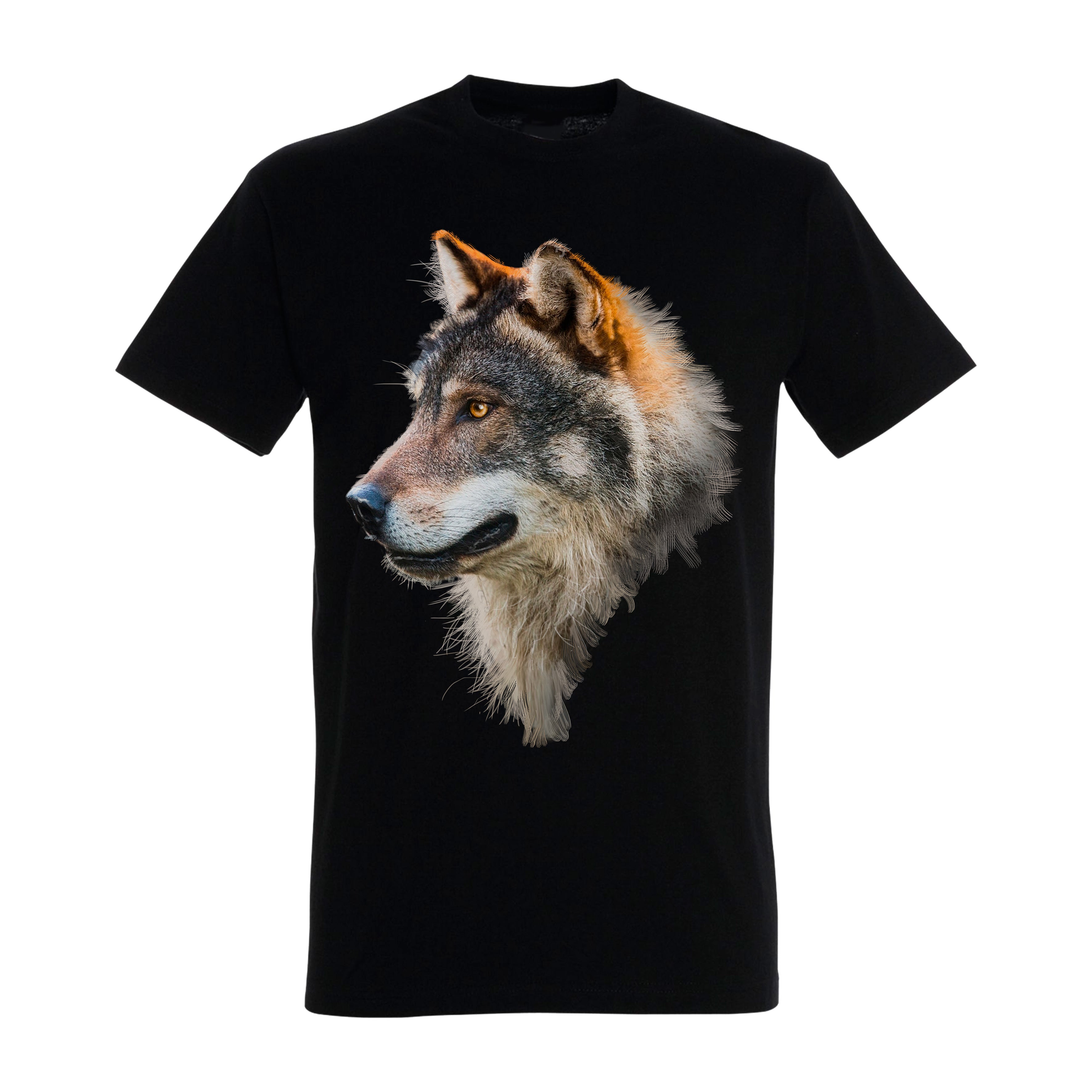
Watch out: a photorealistic design can be a red flag if it looks like a stock photograph lifted onto fabric. Ask whether the artwork was commissioned or licensed, and whether the artist is credited.
Finally, judge the design in context. A realistic animal print works best when the garment's cut and color support it, a natural palette and a clean placement let the artwork carry the piece, while a busy background or a competing logo fights it. That is a design-quality question, not a sustainability one, but it is the difference between a shirt you wear for years and one that stays in the drawer.
Red Flags and Common Mistakes When Shopping Sustainable Animal Apparel
The biggest red flag in sustainable animal apparel is a brand that talks about its mission far more than its materials. Passion is easy to print. Fabric specs, factory names, and donation totals are harder to fake, so check those first.
Watch out for these specific traps:
- "Eco-friendly" with no definition. Polyester marketed as green because it is "durable" is a classic dodge.
- Donation claims with no partner. If no organization is named, there is nothing to verify.
- Photos that hide the print. Zoom in; blurry product shots often hide cheap printing.
- No care information. Brands confident in their fabric tell you how to wash it.
- Pressure tactics. Real conservation work does not need a countdown timer.
A common mistake is buying one hero piece and assuming the whole range matches. Check the fabric and print details on the exact item you are buying, especially if you are shopping across a brand's tees, hoodies, and accessories.
If you want to browse genuine animal apparel without overpaying, a curated nature outlet is a smarter starting point than a random marketplace listing.
Join the Ralf Nature Insider List for Early Access to New Animal Designs
Early access matters in this category because the best animal designs sell through quickly, and insiders see new releases before the general catalog. Joining a brand's list also gives you a direct line to ask the material and donation questions this guide recommends.
Ralf Nature offers realistic animal-themed prints on organic cotton and recycled materials, made for men, women, and kids. The brand collaborates with zoos, aquariums, and museums, and reports 560€ raised across 4 causes. Customer reviews mention print quality and fabric comfort.
If you are ready to see what is coming next, the Tiger Look Xr Hoodie shows the direction of our newer designs.
The real challenge is not finding animal clothing. It is finding a brand that will show you its certifications, name its conservation partners, and stand behind its print quality after a year of washing. That is the standard we hold ourselves to at Ralf Nature, with organic cotton and recycled fabrics, named partnerships with zoos, aquariums, and museums, and realistic animal designs built to last. Get started with Ralf Nature and wear your wildlife fandom with proof behind it.
Frequently Asked Questions
What are the top sustainable clothing brands that support wildlife conservation?
There is no single ranking that fits every shopper, but the strongest candidates share three traits: certified organic or recycled materials, published conservation partnerships, and transparent reporting on donations. Look for brands that name specific zoo, aquarium, or nonprofit partners and explain how a purchase translates into support. Ralf Nature, for example, collaborates with zoos, aquariums, and museums and has raised 560€ for four causes. Always check the brand's website for current partner lists rather than relying on a generic 'eco-friendly' badge.
How can I tell whether an animal-themed clothing brand genuinely supports conservation?
Start by looking for named partners and specific donation mechanics. A genuine brand will tell you which organization receives support, how the amount is calculated, and often when the contribution was made. Vague claims like 'a portion of proceeds goes to wildlife' without a partner name are a warning sign. You can also cross-check the partner's website for a corporate supporter list. If the brand cannot answer a direct question about its conservation donations, treat the claim as marketing until proven otherwise.
Are organic cotton animal t-shirts worth the higher price compared to fast fashion?
Organic cotton typically costs more upfront because it avoids synthetic pesticides and uses non-GMO seed, but it often lasts longer and feels softer against the skin. For a child who may outgrow a shirt in a year, the value depends on whether the item can be passed down or resold. Check for certifications like GOTS, which verify organic content from field to finished product. If a brand cannot provide certification details, the premium may not be justified.
Which sustainable clothing brands offer apparel for men, women, and kids?
Many sustainable brands focus on one demographic, so a family matching set can be hard to find. Ralf Nature offers t-shirts, hoodies, and accessories for men, women, and kids, which makes it easier to outfit the whole family in the same realistic animal designs. When comparing options, confirm that kids' sizing is true to age and that adult fits are available in your usual size. Request a size chart if the brand does not publish measurements.
